High-trust leadership, Leadership & Management
Technology is changing how we work. It's also changing what it means to lead.
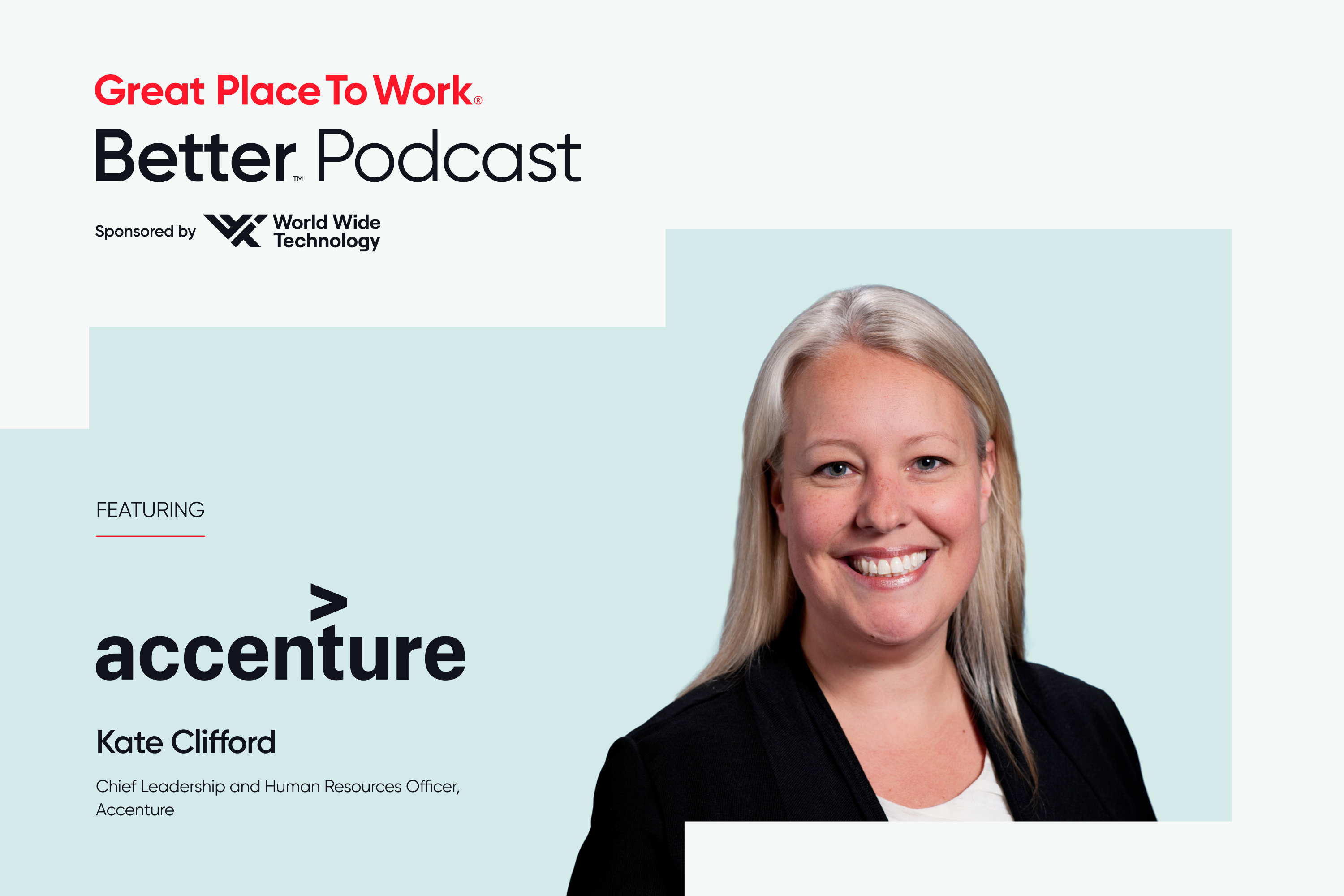
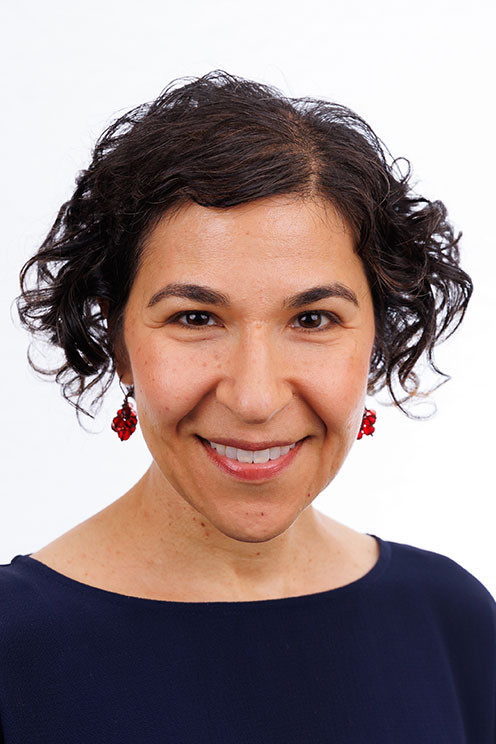
In this episode of Better, Kate Clifford, chief leadership and human resources officer at Accenture, discusses how leadership is changing. She explains why today's leaders need to be willing to learn, ask questions, and lead through uncertainty rather than feel pressure to have all the answers.
Kate also explains how Accenture is reimagining recruiting with AI while keeping humans at the center of every hiring decision. She shares how technology helps recruiters move candidates through the process more quickly without handing hiring decisions over to machines.
Plus, she reflects on lessons from nearly three decades at Accenture and what she's learned from working alongside CEO Julie Sweet.
Key takeaways
1. Leaders aren't expected to have all the answers.
Leadership today is less about being the expert in the room and more about being willing to learn, ask questions, and keep moving forward when the path isn't clear.
2. The role of HR is changing.
HR leaders are no longer just responsible for talent and employee programs. They are workforce architects, redesigning jobs, workflows, and workforce models as technology changes how work gets done, so people can focus more on strategy, judgement, and outcomes.
3. AI can speed up work, but people should make the decisions.
At Accenture, AI helps move candidates through the hiring process faster. But people still decide who gets hired because some decisions require judgment that technology can't replace.
4. Trust becomes even more important during times of change.
When work is changing quickly, people want honesty about what's happening and what comes next. Transparency, listening, recognition, and clear communication help leaders build trust and bring people along through change.
5. Reinvention starts with learning.
Technology is changing jobs quickly, and leaders have to keep learning alongside their teams. The people who succeed are the ones who stay curious, keep building new skills, and help their teams do the same.
[00:00:00] Roula Amire: Welcome to Better by Great Place To Work, the global authority on workplace culture. I'm your host, Roula Amire, content director at Great Place To Work. For years, leaders were expected to have all the answers, but Kate Clifford, chief leadership and human resources officer at Accenture, says the best leaders aren't the ones who have all the answers.
[00:00:24] They're the ones who ask the best questions. She tells us why that is so important. She also takes us inside Accenture's recruiting process, explaining how AI has made it more effective and productive, more enjoyable for candidates and for hiring managers, and how humans stay in the center of every hiring decision.
[00:00:47] Kate has been at Accenture for nearly three decades, over 13 different roles. She tells us what she's learned over those years, how the role has changed, and some unforgettable advice from CEO Julie Sweet. If you are leading your people during uncertainty, you will find plenty to think about in this conversation.
[00:01:08] Enjoy.
[00:01:15] Kate, welcome to the podcast.
[00:01:17] Kate Clifford: Thank you so much, really. Honestly, thank you for having me. It's a pleasure to be here.
[00:01:21] Roula Amire: So anyone who listens to this show knows I love an origin story, you know, what people studied and the, you know, turns their career took. You studied chemistry and math, not exactly the traditional path to HR.
[00:01:35] So what, what were you planning on doing with those degrees? What did you think your career would look like back in college?
[00:01:43] Kate Clifford: Chemistry and math, yes, and I loved those two degrees because I didn't have to memorize things. They were built in logic, and I felt like I could always solve the problem, which was one of the reasons why I gravitated towards math and the sciences.
[00:01:58] And at the time, I actually thought I was going to be a chemical engineer, but I only thought I was gonna be a chemical engineer because that's what chemistry and math majors do. And as I grew my career and I took more business classes, I realized that I would rather start my career in business. And so over 28 years ago, I joined Andersen Consulting at the time as a consultant.
[00:02:21] Roula Amire: Now you're at Accenture and-
[00:02:23] Kate Clifford: Mm-hmm ...
[00:02:23] Roula Amire: um, you've had many roles at Accenture. By my count, you're in your 13th, I believe, which is chief leadership and human resources officer. You've been in this role, you know, about a year now, so we'll do, uh, have a moment of reflection before we dig into other questions.
[00:02:40] You know, looking back on your first year, what surprised you or what's stretched you about this position?
[00:02:48] Kate Clifford: Wow, 13. I've actually never counted that before. Um, but I'm glad that you did because that seems about right. I've been with Accenture for 28 years and roughly had a new role about every two years.
[00:03:01] So that seems to foot about 13 roles since I have joined this incredible company. But this last year for me has been an incredible year of growth, an incredible year of learning, an incredible year of stretching. And It's a, it is a very different role than any of the roles I've had in my career. And as I entered the role in September of last year, I really had to think about and ground on our leadership essentials.
[00:03:31] The leadership essentials are how we think about all of our leaders across Accenture, and one of them is to lead with confidence, competence, and humility. And I felt like I had the competence. I had to grow the confidence, but I had to have a lot of humility, which for me meant a lot of listening, asking a lot of questions.
[00:03:52] I, I joke often that I will forever be a three-year-old constantly asking why, wanting to better understand, and that has helped me as I have grown into this role, not only as the leader of the function, right, being the CHRO and leading the C- the HR function, but also being an enterprise leader, which is a, a new place to be, where our CEO expects all of her direct reports not only to be an expert and be highly competent in the work that they're doing, but be a part of her leadership team across the enterprise.
[00:04:25] Roula Amire: Well, I think for all of us, it's encouraging and inspiring that, you know, even though you've been there for 13 years, there's still things to learn, to grow, to be stretched.
[00:04:36] Um, you know, we, we tend to think, some of us tend to think, oh, once we get to X level, you know, we're good, we're done. Um, but you know, to see someone continually willing to grow and learn, you know, as the company grows and learn is, is great. Speaking of learning, I want to get your perspective on how leadership is changing.
[00:04:54] From where you sit, what do you think it takes to lead today when technology, expectations, and the nature of work itself are changing so quickly?
[00:05:04] Kate Clifford: Learning is at the center of that. I do feel the world is changing every day. There is so much to continue to learn, and so much of my job is to ensure that we stay ahead of where our clients are going in order to give the people of Accenture, the incredible people of Accenture, the careers and the opportunities that they want and desire and aspire to.
[00:05:29] In terms of leadership, you know, I'll, I'll start with what's not changing. We talk a l- lot about what is changing, but I always like to anchor on let's just ground on what's not changing. Our core values, who we are as Accenture, what we believe in, our values, they're not changing. Care, compassion, stewardship of our people, that's not changing.
[00:05:55] And our belief that we must lead with transparency, right? 'Cause we have a, a saying that transparency builds trust, and we need to lead with transparency. So that, in my mind, is not changing. Our strategy, right, our stated strategy is that- is to be the reinvention partner of choice for our clients and lead in the safe, widespread adoption of AI, and be the most client-focused, AI-enabled, great place to work for reinventors in the world.
[00:06:20] Now, that's a bit of a mouthful. But if you really unpack that, right-
[00:06:24] Roula Amire: Let's unpack that ...
[00:06:25] Kate Clifford: yeah, people are at the core. They are. And it really starts at the top. So if I unpack it a bit, right? What does it mean to be a reinvention partner?
[00:06:35] Roula Amire: Right?
[00:06:36] Kate Clifford: First, you have to be credible with the depth in both the industry and the functional areas of our clients, right?
[00:06:43] It has to start with having that credibility to show up every day. But it doesn't stop there, because leading through transformation, to me, now requires additional skills. And we've been working on, over the past year, our reinventor leader profile, and it starts with additional skills. So for example, we expect all of our leaders at Accenture to have a depth of level of understanding of the technology, right?
[00:07:12] While it used to always be true for our technology leaders, now it's true for everyone, including me, right?
[00:07:18] Roula Amire: Mm-hmm.
[00:07:19] Kate Clifford: Including all of my direct reports. Everyone in the company needs to have a level of depth on the technology. But the other two are enterprise change and communications. So enterprise change.
[00:07:30] We have long been in the business of change management, but that is different than enterprise change, right? Enterprise change is leading through a reinvention, leading through a transformation. How do you take an organization along in an inspiring way and do that at scale? It's what we do for our clients, and it's what we do for ourselves, and we expect every leader, again, not only our legacy consulting leaders, but all of our technology leaders, all of our corporate function leaders, to be able to lead through enterprise change And then the last is communication.
[00:08:09] And communication, you know, certainly as you become more senior, we expect more of our leaders to be able to communicate effectively, but it's refining that point. We expect our functional leaders, our industry leaders to speak the language of technology and our technology leaders to speak the language of business.
[00:08:30] And so we assess our leaders on their ability to communicate, and we give them coaches, and we help them because in a time of deep uncertainty, it is important that a leader can show up and communicate clearly and inspire not only their teams, but give the client, um, a vision of what to look forward to.
[00:08:53] Roula Amire: So can you maybe share some specifics on how you are coaching those leaders? Um, you know, what does that, what does that look like?
[00:09:02] Kate Clifford: Yeah. We're doing it in a number of different ways. I talked a bit about the training that we're doing across those three skills. We are also, partnering with one of our acquisitions, we love our acquisitions, YSC, to do leadership potential assessments where we do, um, a deep dive into the potential of the leader that really is all in the spirit of development, right?
[00:09:25] This isn't about performance. This is about helping our leaders to develop. And then we're working closely with Great Place To Work, so thank you for that, on instilling high-trust behaviors and educating our leaders on, how do you lead in a high-trust way? And we've done sessions in all of our different markets.
[00:09:44] We... In fact, we've touched over 1,000 leaders at this point, taking them through And not only the baseline of how do you build trust and what are the skills that you need, but then how do you practice them in reality? How do you practice them in all of the moments that matter? I like to think about, you know, I, I believe a leader in this time really needs to have a very high tolerance for uncertainty, but paired with the discipline to act decisively, and then the inspiration to take the organization with them.
[00:10:16] And while you can say that simply, it is a, a high bar we're asking of all leaders, not only at Accenture.
[00:10:22] Roula Amire: Oh, yeah. That's extremely difficult. That's difficult for us to do in our work lives and our personal lives- Mm-hmm.
[00:10:28] Kate Clifford: True ...
[00:10:28] Roula Amire: you know, to show up, to show up in that way.
[00:10:31] Kate Clifford: True.
[00:10:32] Roula Amire: Um, so we've talked about, you know, reinvention and, and learning and how the leadership role is changing.
[00:10:38] Let's stay on that theme and talk specifically about HR. Sure. How has the role of HR changed? So for example, what's on your plate now that probably wouldn't have been on a CHRO's plate two, three years ago?
[00:10:51] Kate Clifford: Yeah. I've been reflecting on this quite a bit as I've stepped into the organization and really, um, looked at and, and built a strategy and a vision to inspire my own team.
[00:11:02] I've been reflecting quite a bit on this, and I'll take a step back even a little bit further than two to three years. But if you think about legacy HR, right, it really started as an administrator, compensation, benefits. The role was largely administrative. And then we became partners, right? It was partners advising the business on talent and workforce-related issues.
[00:11:25] COVID hit, and HR became a strategic advisor, right? Because not only were we dealing with a, a global pandemic, but business continuity relied on an ability for an HR leader to navigate through incredible uncertainty and not anything any of us had dealt with before. The step change I've seen now in the last two to three years is what I call HR as a workforce architect, right, and a strategic enterprise leader.
[00:11:55] And I talked a bit about, uh, an enterprise leader, but a strategic workforce architect. So think about an HR leader now needs to design operating models, architect workflows, develop new job architectures, and yes, while we've always been accountable for jobs and job descriptions, this idea of architecting new workflows, what is the work, and then new jobs, what is the workforce in a time of uncertainty, is new.
[00:12:26] And you're even seeing the depth of tech come into it, and some companies have combined together the HR and the technology roles, knowing that so much of the work and the workforce is now dependent on technology in a new and different way.
[00:12:40] Roula Amire: So give us an example of what an HR architect... What does that look like in terms of something that you'll architect that you wouldn't have before?
[00:12:49] Kate Clifford: Yeah. So I'll, I'll give you an example 'cause we're going through it right now. We have 200,000 software engineers, and two years ago they woke up every day and they were coding and developing new systems, right? For our clients and for ourselves. That looks very different right now, and not just the skills of those individuals, but the way they go about approaching their work, right?
[00:13:14] They're not, they, they're not needing to hands-on-keyboard do all of the coding like they used to. Now they are orchestrating agents to come together to do that work. So their role has evolved, and our methods have evolved in a way that now has them leading a workflow, exercising judgment, um- Dealing with issue resolution different than just coding something.
[00:13:44] And so that work looks completely different. The way they interact with their teams look com- looks completely different, and their job has changed. And so it's architecting what does that work look like, partnering with our business leaders to redefine the end-to-end method, and then ensuring that our people have the skills that they need to deliver in that new way.
[00:14:07] Roula Amire: Yeah. Okay. That's very helpful. So given how much the role has changed, what do you think other HR leaders should look for when they're building their teams? Can be skillsets, it can be experience. You know, what, what's, what's valuable where we are today?
[00:14:23] Kate Clifford: Any leader that's coming in, especially new in an organization or even new to role, the first thing they're doing is evaluating their team.
[00:14:31] And as I take a step back and, and thought about what did I look for, well, there's some, I'll call it, hard skills. Like, I was... I'm looking for people who have led through transformation, people who can, um, lead through ambiguity. But I probably would've said that a year or two ago as well. But I want people who thrive in it, right?
[00:14:51] Who love big, complex problems and have the experience to display the judgment and make the decisions that need to be made, but people who can thrive in a world of ambiguity, and that's hard. We talked about that a little bit before. It's, it's hard to be in that world, and that is one thing that I deeply look for.
[00:15:14] And a, a bit of how I think about it is they're deeply skilled in what they know, but they have the EQ to know that they need to change, and then the IQ and what we call the TQ, the technology quotient, to be able to change, right, is a lot what I look for. I also look for people who are gonna challenge me and be disruptive.
[00:15:32] I want people who are asking me the hard questions, the questions that nobody else wants to ask. In fact, I just interviewed someone, not for my team, but for a different role, and the person showed up to, to the interview and the first question they asked was, "Why do you need this job?" And I loved that question.
[00:15:48] Roula Amire: Yeah.
[00:15:48] Kate Clifford: Right? What a good, thought-provoking question.
[00:15:51] Roula Amire: Agreed. So let's move that from aspirational to practical. Yeah. You know, how, how are you looking for someone who's comfortable in the uncomfortable, who's thriving in, in, in certain environment and is, you know, understands they, you know, they might not have all the answers?
[00:16:09] Kate Clifford: Yeah.
[00:16:09] Roula Amire: That's definitely helpful right now. But how do you, how do you gauge and, and judge that?
[00:16:13] Kate Clifford: It's some of the shifts we're seeing in leadership overall. So if you think about a leader of the past, it was someone who projected confidence and certainty, right? That they knew all the answers, and they could be very articulate in what all the answers are.
[00:16:30] I look for people that ask really good questions, right? Yeah. It's this shift from being the smartest person in the room to the person that asks the best questions. Because that, to me, is someone that's demonstrating a level of curiosity about the future, as well as the confidence to say, "I don't know. I'm gonna ask that question."
[00:16:52] Roula Amire: Yeah. That's great. I love that. Of course, I love asking questions, so, uh ... Yeah. I support that.
[00:16:59] Kate Clifford: it, it is, and you know- Yeah ... as people join my team, I say, "I only ever get nervous if you don't have a question." Right? If, if you come in and you think you know everything, that's gonna make me very nervous.
[00:17:09] Roula Amire: Yes.
[00:17:09] Kate Clifford: I love people that have lots of questions.
[00:17:12] Roula Amire: Yeah. That's great, and I think that's a great takeaway, you know, for the listener too, to just say that. Because that- that's creating an environment of psychological safety where someone can just feel like they're new, you're this CHRO, and you are looking for, you are looking for people to be disruptive and, and ask questions, and you're telling them that.
[00:17:30] Kate Clifford: Ask questions and challenge me. Yeah, challenge me. Challenge the status quo.
[00:17:35] Roula Amire: So a lot of the conversation on work and the future of work, even though we are now in the future, what is the future, um, is on AI and how it's, you know- Mm-hmm ... changing, changing how we work. I've heard you talk about, um, a human in the lead, so human-led, versus just keep a human in the loop, which is what we hear.
[00:17:55] What does that mean to you, and what does that look like in practice?
[00:17:58] Kate Clifford: Yeah. To me, simply it means AI can drive productivity, but humans drive business outcomes. And humans have the judgment, and humans have the decision-making capability to drive those outcomes. And what we've seen over the last couple of years is a lot of run to productivity, and sometimes just for productivity's sake, and it's not actually changing a business outcome.
[00:18:26] It's not driving top-line growth. It's not always saving bottom-line growth. And so to me, human in the lead means it's not just about the productivity, it's about the outcomes that we're driving, the business outcomes that we're driving.
[00:18:43] Roula Amire: A couple more questions. Um-
[00:18:45] Kate Clifford: Sure.
[00:18:45] Roula Amire: Is there a, is there a decision that, you know, about jobs, people, careers, or the business that you think should never be handed over to AI no matter how good the technology is or quote-
[00:18:59] Kate Clifford: Yeah
[00:18:59] Roula Amire: how much time is being saved? There, are there just things that are, are off limits, you know, either in your department or at Accenture as a whole?
[00:19:06] Kate Clifford: An example of how I think about humans in the lead that's in practice here at Accenture and, and what we work on with our clients, which is near and dear to my heart, is all around recruiting and the hiring process.
[00:19:18] And if you think about recruiting, recruiting is a very, um, high-touch process, or has been in the past, right? Recruiters are shepherding a candidate through a process. They're shepherding a hiring manager through it, and they're ensuring a strong experience and fit for both the candidate and for the company.
[00:19:38] But in reality, when we unpacked where a recruiter was spending their time, they were spending a significant amount of their time on, one, transactional-related things, re-keying information between one system to another, and almost 30% of their time Doing calendar management, so scheduling interviews, interviews between the candidates and the hiring managers, rescheduling them when someone couldn't make it.
[00:20:02] And so while the desire was to have a recruiter spending time on sourcing and on candidate management, in reality, that's not where they were spending their time. And so as we reimagined the process and introduced agentic, right, we created a process that was, one, better for the candidate. In fact, we've seen our NPS scores for candidates go significantly up.
[00:20:26] It's faster. It's 30% faster than we've been able to operate before, and we're getting higher quality candidates. It's 28% higher quality candidates. So I'll give you a sense of how it works. It starts where the candidate applies, and the candidate goes in, and we've got an agent that is helping them identify the right role for them.
[00:20:45] Maybe they want to apply directly to a role, or they're not quite sure. They know they want to come work for Accenture. They're not quite sure. There's an agent that can help them identify a role. Then instead of a recruiter calling them and asking them some relatively, well, always standard, but relatively basic questions like, "Do you have work authorization to work?
[00:21:06] Are you able to work?" Compliance-related questions, we can now do that automatically. And so that then progresses a candidate even faster. Then now we're comparing the candidate to the job rack, and historically, that's only been a recruiter-led step. Recruiters would call, and they would do what we call screening the candidate.
[00:21:28] Now we have an agent that helps in that process, and they can look at the candidate's profile, they can look at the job rack, and they can assess how strong of a fit. Are they really strong fit? Are they kind of a fit? Or gosh, we don't see the fit in there, right? Or the agent doesn't see the fit in there.
[00:21:46] And at that point, if someone is a very strong fit, they will continue through the process. If they're a moderate fit or not as quite as strong of a fit, the agent does not reject them. We have a principle. An agent would never reject a candidate. What would happen is then that candidate would go for a recruiter review.
[00:22:05] So the recruiter is looking at their whole profile. The recruiter is exercising their judgment. The recruiter is understanding really could they be a strong candidate, maybe not for that role, but for something else? 'Cause we want to make sure that we're not losing out on very strong talent out in the market. Then the candidate will go through a skills assessment.
[00:22:26] So historically, that had been done with a human who was interviewing and assessing the skills of an individual. Now we have ways through technology to really objectively assess someone's skills, especially in technology-related skills. How deep are they in engineering, for example? Assuming all that goes well, and again, if they didn't pass the skills interview, a recruiter would step in and, and look at what are the skills, what are the experiences that they have had.
[00:22:56] Then we have an agent who does the calendaring, right? And they get them calendared with a candidate in the lead at that point, a different human in the lead. The candidate is now leading, when does it make sense for them to meet with the hiring manager? And an agent can directly schedule that. And then finally, that last step is the hiring manager assessing culture fit, assessing judgment, assessing those things that only humans can do to make a final decision on whether or not, you know, we will hire that individual, and then it goes to an automatic offer, assuming it all goes forward.
[00:23:30] So while agents are orchestrating the process steps, it is a recruiter who is overseeing the process. Certainly, they're picking up anyone that didn't pass at any one point in time, because we want to make sure we're not losing out on strong candidates, and they're spending more time in relationships with the hiring manager, relationships with the candidate, and more time sourcing.
[00:23:54] So we are out identifying the best candidates that we can bring in to Accenture to grow their career and to serve our clients.
[00:24:01] Roula Amire: So we've talked about leadership, AI a bit. Just kind of taking a step back-
[00:24:05] Kate Clifford: Yeah ...
[00:24:05] Roula Amire: how, how has AI impacted the culture of Accenture? How has it changed how you work together, uh, either among leadership, from leaders with employees, but how would you describe its, its impact on your culture?
[00:24:19] Kate Clifford: Culture is so deeply ingrained to a company because it's not a program, it's not an initiative, right? It... to us, our culture has always been rooted in our core values, and we have a very strong culture of learning. And so I've actually seen a ton of energy around the future and what our people are learning.
[00:24:41] In fact, in our latest Great Place To Work survey, we asked our people around the opportunity with AI, and 81% of our people came back and said they're excited about what's in front of them with AI, and they're showing us, too, with their actions, because we've had over 400,000 of our people go through our agentic learning program, which is a learning program we started at the beginning of the fiscal year that combines both learning within Accenture as well as a partnership with Stanford.
[00:25:08] And so we've seen a lot of energy and excitement around the continuous learning. And we've need to double down on transparency and trust. There is uncertainty out there, right?
[00:25:19] Roula Amire: Yeah.
[00:25:19] Kate Clifford: And if I talked before about the shift in leaders who historically have been confident and had all the answers and knew, you know, could, could perfectly describe the future, there's more uncertainty now, right?
[00:25:31] And so the humility of our leaders, leaning in on that humility, learning and listening to our people has been incredibly important, right? And we've leaned in on the high-trust behaviors, so much of the work we do with Great Place To Work, right? Things like deeply listening, sharing information transparently, inspiring, even in a time of uncertainty, inspiring a future, taking action on what they're hearing and saying thank you.
[00:25:58] We spend quite a bit of time around, of course there's ways to recognize our people through compensation and benefits, and those are very important, and we shouldn't underestimate saying thank you, right, and being specific around that. And it's, in fact, some of the learning we've done or the training we've done with our leaders has been around how do you do that, and how do you do that in an authentic way?
[00:26:20] Roula Amire: Wow, that, this is the third time that's come up on the podcast this season is the power of a simple thank you. You know, it's, it's, it's inexpensive, it's simple, it's easy, anyone can do it. But it has to be authentic, it has to be genuine, and it, it has to be part of your behavior, your learned behavior. Um, it can't, can't be- And it-
[00:26:41] a checklist item or else it won't, it's not gonna land.
[00:26:44] Kate Clifford: And I would say, I would add to your list it has to be specific, right? Anyone can say, "Oh, gosh, thank you."
[00:26:50] Roula Amire: Right.
[00:26:50] Kate Clifford: Right? But thank you for what you did, and you did these three things, and it had that impact on me, or it had that impact on the outcome. The more specific, the more the people feel seen.
[00:27:01] Roula Amire: Yes, absolutely. Yeah. That's a great takeaway.
[00:27:09] AI is reshaping jobs, teams, and leadership faster than most organizations are ready for. From strategy to security to adoption, the AI Proving Ground podcast presented by World Wide Technology is a grounded look at what responsible AI leadership really requires in this era of rapid change. Find it now wherever you get your podcasts.
[00:27:39] Reinvention is in the DNA at Accenture, certainly. That is an understatement, uh, and a through line in the way your CEO, Julie Sweet, leads. Um, you've had a front seat to it all. What's something you've learned from Julie that stayed with you, either personally or professionally, or both?
[00:27:59] Kate Clifford: I feel lucky I get to learn from Julie every day.
[00:28:02] You're right, it's a front row seat, and I feel very privileged that I get to learn from her every day. Personally and professionally, I guess, uh, maybe I'll do one of each, if that's okay. Uh, professionally, Julie is a learner, and she leads from the front, and I feel like that's been a, a bit of a theme of this conversation.
[00:28:22] But she practices what she preaches. She is very well-read, but also very well-practiced. New technology comes out, she wants to know everything about it, and she can get to a level of detail of deeply understanding not only what it does, but what's possible in terms of business outcomes that maybe you wouldn't expect of someone in her seat, right, who's got a, a huge agenda in front of her.
[00:28:51] But her ability to learn, absorb, and then articulate a reinvention to not only our clients, but to all of us, right, all of our reinventors at Accenture, is something I would say not only I am learning from her and how she prioritizes her time around learning, but I admire about her. Personally, I, I've learned it's okay to be a mom and have a life, to be honest.
[00:29:22] You know, when I first stepped into role, I had already been announced. It wasn't quite September 1, so I was about to be stepping into the role, and it was August timeframe, and she happened to be back in her home office for the week. And she asked, she said, "Hey, can you come up to DC and let's just spend some time together as we get ready to start the fiscal year?"
[00:29:43] And of course, here I am, brand new in role. I said, "Absolutely, I can come up. Is it okay if I come up on Wednesday instead of Monday?" And I said, "Because on Tuesday, my daughter is starting kindergarten, and I'd really like to walk her to school on the first day." And Julie's response was immediate. She was like, "You should not come up at all this week."
[00:30:05] She said, "In fact, every year I block the first week of school, and I am always home the first week of school." She said it's incredibly important, and that really stuck with me. Here I was, not even quite in the job. We had a huge agenda in front of us. We had... You know, we were about to go through our own big reinvention, but she still prioritized that first week of school as an equally important milestone.
[00:30:30] Roula Amire: Wow. When, when we talk about what care looks like in the workplace-
[00:30:33] Kate Clifford: Yeah ...
[00:30:33] Roula Amire: that's, that's what it is.
[00:30:35] Kate Clifford: Totally. Yes. Yes, exactly.
[00:30:37] Roula Amire: That, that is practicing what you preach. That is living your values. Um-
[00:30:42] Kate Clifford: Yes ...
[00:30:42] Roula Amire: that's just making time for the things that are important, saying that, and then doing it and modeling it.
[00:30:47] So that's great to hear of her and of you, that you felt you could, you know, speak up and say, "I can come, but how about this date?" Um- Yeah ... and then you got to be there for the whole first week of school. So that's wonderful.
[00:30:59] Kate Clifford: Of kindergarten.
[00:31:00] Roula Amire: Of kindergarten, yes.
[00:31:00] Kate Clifford: We don't want to miss the first week of, the first week of kindergarten.
[00:31:03] Roula Amire: Yes.
[00:31:04] Kate Clifford: Yeah, yeah.
[00:31:05] Roula Amire: Um, so we're gonna segue and, uh, ask a couple questions to get to know you a little bit better, so we're going back in time. Um-
[00:31:13] Kate Clifford: Okay ...
[00:31:13] Roula Amire: what did you want to be when you grew up? You know, as a little girl, was there a dream you had for yourself?
[00:31:19] Kate Clifford: I wanted to be a pediatrician. Okay. I can't exa- Yeah
[00:31:25] I can't exactly explain it. Um, but I liked children, and I've always had a fascination with the medical field. I don't know, maybe that's why I went into the sciences. I always say I, someday I would love to be a nurse, but I did, I wanted to be a pediatrician, and then apparently a chemical engineer. I can't make that connection.
[00:31:48] Roula Amire: Um, what was your first job growing up? Um, so the first time you got paid for anything, not a professional job, but any kind of job, and was it a great place to work?
[00:31:58] Kate Clifford: Yeah. Well, I had some, I'll call it typical high school-type jobs. Okay. Like, I was a babysitter. I mowed lawns. I even had a, a newspaper route.
[00:32:08] Um-
[00:32:08] Roula Amire: Oh, wow. You check all the boxes, Kate ...
[00:32:10] Kate Clifford: but those things don't really exist anymore, a newspaper route. But I did-
[00:32:14] Roula Amire: Yeah ...
[00:32:14] Kate Clifford: I did have one of those. But my first, I'll call it, job where I got a real paycheck was at a hair salon, in fact, the hair salon that I went to, and I was the receptionist. So I got to answer the phones, and I got to book, uh, book appointments.
[00:32:29] And you asked if it was a great place to work. The way that, um, you had to answer the phone, the salon's name was Command Performance, you had to answer the phone, "It's a great day, Command Performance," and it set the tone.
[00:32:42] Roula Amire: Yeah.
[00:32:43] Kate Clifford: Right? It set the tone. You were starting every conversation by declaring-
[00:32:49] Roula Amire: Mm-hmm
[00:32:49] Kate Clifford: it was a great day, and it did lead to a great place to work.
[00:32:53] Roula Amire: I love that.
[00:32:54] Kate Clifford: It was a good fun first job.
[00:32:56] Roula Amire: Yeah, yeah. You were a frontline worker. Yeah. Um, is there a book or podcast that you'd recommend to your peers, or something fun that brings you joy, makes you laugh, that you're enjoying right now?
[00:33:09] Kate Clifford: There's a lot of different books and podcasts that I read at different points in time, but I would say there was a book by Hoda Kotb that came out a couple of years ago called Daily Joy, and I absolutely love it because it's short.
[00:33:25] It's one page per day, and it is either something that she's experienced or advice that she would give that's all about joy, and it's all about finding joy in the little things, and I think that that is incredibly important, to find joy in the little things. And so not only did it bring a smile to my face, it was a good reminder every day.
[00:33:44] Roula Amire: Is that something you can look at every day and, like, read a passage, or did you read the book and then you can return to it as needed?
[00:33:52] Kate Clifford: I, in, in very Kate form, I would always try to do it every single day-
[00:33:57] Roula Amire: Okay ...
[00:33:57] Kate Clifford: and then life might get in the way, and then I would catch back up and maybe do five in a day, but my intention was always to do one a day because a little bit of joy every day is good.
[00:34:08] Roula Amire: That's a great recommendation. We love Hoda, so thanks for that.
[00:34:11] Kate Clifford: Good.
[00:34:12] Roula Amire: What advice would you go back and give your younger self, your younger Kate?
[00:34:17] Kate Clifford: I guess the advice I would give my younger Kate is to only be one Kate. So when I first started in the corporate world, I definitely was work Kate and personal Kate, and in fact, my friends at the time would joke, like, "Don't ever call Kate at work, 'cause she's work Kate."
[00:34:36] And, uh, I've just learned over time that that's really hard to do. It's really hard to, to be something else in your personal life than you are in your professional life, and to show up authentically, you can only be one Kate. And so I would tell work Kate to chill out a little bit- ... and to only be one Kate.
[00:34:56] Roula Amire: Yes, work Kate can take a backseat.
[00:34:58] Kate Clifford: Yes.
[00:34:58] Roula Amire: Tell us who... What did work Kate sound like? Who, who was... So if I was your friend and I called you at work and you were work Kate, what... Who's gonna be on the receiving end?
[00:35:07] Kate Clifford: Work Kate only ever spoke about professional-related things. Work Kate felt like there was no time in the day for anything personal, and that is just not reality, right?
[00:35:20] That is just not reality, and now I'm living it for, like, far more. Of course, if the school calls, I'm going to pick it up.
[00:35:27] Roula Amire: Of course.
[00:35:27] Kate Clifford: Right? Yes. And- Yes ... and so but even without that, even without, like, a, a situation or something that might be timely or an emergency- It's okay to what we call bring your whole self to work, right?
[00:35:42] You are who you are. You bring your personal life. You bring your professional life. And part of what we talk about at Accenture is we want to fulfill that for you. We want to be the place where any reinventor can come and achieve their aspirations, both personally and professionally.
[00:35:57] Roula Amire: Well, that's a great note to end on.
[00:35:59] Thank you, Kate. I enjoyed the conversation. I did, too. Thank you so much for making the time and, uh, being with me today. I really appreciate it. Thanks for listening. If you enjoyed today's podcast, please leave a five-star rating, write a review, and subscribe so you don't miss an episode. You can stream this and previous episodes wherever podcasts are available.
Transform Your Workplace with Culture Insights from Top Experts.
Subscribe to our podcast and discover how to create a culture that attracts and retains top talent.