

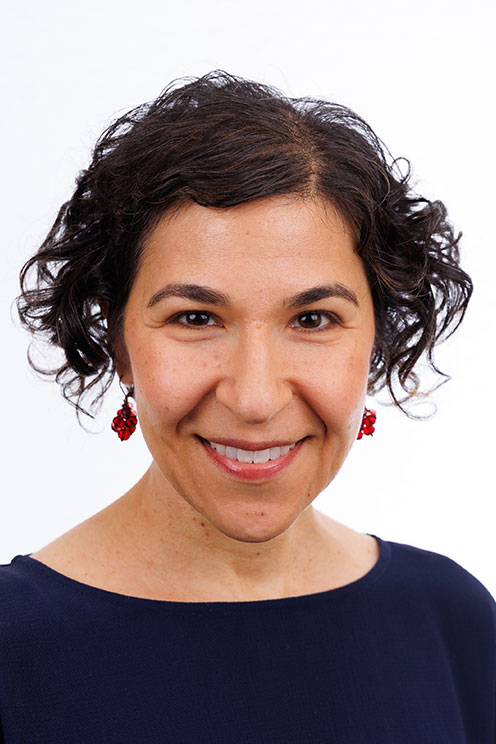
In this episode of Better by Great Place To Work, Shurawl Sibblies, EVP and CHRO at MetLife, shares what MetLife's latest Employee Benefits Trends Study reveals about the growing importance of trust, connection, and communication at work.
She explains why employees who feel cared for are more engaged, productive, and healthy, and why meaningful work becomes even more important during times of change.
As AI reshapes the workplace, Shurawl argues that the skills that matter most aren't technical. They're human.
Meaningful relationships aren't becoming less important. They're becoming the competitive advantage.
She tells us how MetLife is preparing leaders for the future by focusing not on AI tools, but on the human skills that matter most: curiosity, judgment, communication, and trust.
Plus, Shurawl reflects on the life experience that changed the way she thinks about leadership and left her asking an important question: How do you want to be remembered?
Key takeaways
1. Listening only matters if you do something with what you hear
Connection starts with genuinely listening to people, understanding what's important to them, and making them feel heard. But trust is built when employees see leaders act on their feedback or explain why certain changes aren't possible.
2. AI makes human skills more important than ever.
As technology becomes part of everyday work, the skills that set leaders apart aren't technical. They're human. Curiosity, learning, judgment, communication, and the ability to build trust will only become more important in the age of AI.
3. Lead with curiosity instead of pretending you have all the answers.
Strong leaders don't pretend to know everything. They stay curious, keep learning, ask questions, and are transparent about what they're still figuring out.
4. Recognition goes a long way.
People want to know their work matters. One of the most powerful forms of recognition is also the simplest: "Thank you for doing this. It had an impact, and I appreciate your contribution."
5. Vulnerability builds trust.
Being open about challenges, uncertainty, or difficult moments helps build trust and reminds people that nobody is perfect. It also creates space for more honest conversations and stronger connections with your team.
[00:00:00] Roula Amire: Welcome to Better by Great Place To Work, the global authority on workplace culture. I'm your host, Roula Amiere, content director at Great Place To Work.
[00:00:11] Technology is changing the way we work, but my guest today says the most important skills haven't changed at all, and I could not agree more. Shurawl Sibblies, EVP and CHRO at MetLife, talks about why connection, trust, and communication are more important than ever.
[00:00:30] We talk about what it takes to make people feel seen, heard, and valued at work, and why recognition can be as simple as a thank you. This is a thoughtful and hopeful conversation. One thing that has stuck with me from our conversation is her reminder to be intentional with our interactions and to think about how we want to be remembered.
[00:00:52] Enjoy.
[00:00:58] Well, Cheral, welcome to the podcast. It's great to have you on.
[00:01:01] Shurawl Sibblies: It is my pleasure. I'm really excited to be here today.
[00:01:04] Roula Amire: Am I right that you live in New York?
[00:01:07] Shurawl Sibblies: I do. I do live in New York. Born in New York, and, lived in different, parts of the world before, but, really excited to be in New York City, especially at this time of year with all the excitement and great things happening.
[00:01:19] Roula Amire: Yes, absolutely. Absolutely. So you can say you're a New Yorker?
[00:01:24] Shurawl Sibblies: I am. Yes, I can.
[00:01:26] Roula Amire: I ask because I've lived in Chicago more than 20 years, but I don't say I'm a Chicagoan because the follow-up is always, "Oh, did you grow up in the city or the suburbs?"
[00:01:36] Shurawl Sibblies: Got it. Okay.
[00:01:36] Roula Amire: And when I say Ohio, you know, they're out.
[00:01:38] They're like, "You might live in Chicago, but you're not a Chicagoan." Well, it's, it's great to have you on again. We can jump in. I want to dive into some of the findings from your 24th Annual Employee Benefits Trends Study. it's packed with data, which I know you love. we're gonna dig into, into the details, but one of the things that really stood out, is the need to bring the humanness back.
[00:02:03] You know, the humanness of it all, human skills, connection, communication, which I think is something we're also seeing outside of work. but that's a whole different discussion. So this year's report is called The Success Reset, and my question is, to start us off, why, why now? Why are we calling for a reset in how we define workplace success?
[00:02:25] Shurawl Sibblies: It is a excellent question, and, you know, a- as you said, we've been doing this, study, you know, t- 24 years now in the running, and it's always interesting the insights that surface given the times that we are in. And especially in this moment when there's so much about the pace of technology, the advancement that's happening, the speed, it actually puts more pressure, and, and perhaps I could say even more value on the human connection.
[00:02:54] In this moment when people are navigating so much and they have to adapt, the things that you are amplifying as you collaborate with technology are those human skills. And I would, I would argue in this moment, to thrive, y- we have to be connected and show up for one another, to be able to take advantage of all that technology has to offer.
[00:03:17] So I- I think this moment really amplifies it and, you know, we never know what the results are exactly gonna be until we do the, you know, work on the research. But it really, showed, and it came across quite loudly, which is also exciting because it, it, it tells us that we recognize it and people are striving for greater connection.
[00:03:36] Roula Amire: So what was something in the data that made you say- We need to rethink how we measure success. What did it show you?
[00:03:44] Shurawl Sibblies: It's gonna sound really simple, but yet the, not easy to make happen. So some of the insights from the study are that, is that, you know, employees, when they feel trust and they feel cared for, those people have, you know, 3.8 times, they're more likely to feel holistically healthy, 2.4 more times likely to be engaged, 1.9 times more likely to be productive I think everybody can be aligned with wanting, their, their workforce and their people to be healthier, to be engaged, and to be productive, and to be able to contribute.
[00:04:19] So those insights around the importance of connection and, the impact it can make to the worker, but also to get better business results is very, very, very important.
[00:04:32] Roula Amire: Let's kinda define this. When, when you say connection, what does that look like in practice? What are leaders doing or not doing that makes people feel connected with each other, colleague to colleague, we can work with each other, we can get things done, and also connected to, of course, leadership and management and, and everyone else at the company?
[00:04:51] And, and are those different?
[00:04:53] Shurawl Sibblies: I like to keep it really simple, and I think about, think about relationships that you have in your personal life even, and, relationships, and I would say some of the relationships we have at work are very personal because we spend so much time with the people that we work with.
[00:05:07] But a fundamental to building connection is truly listening to people, understanding what their values are, what they're striving for. the everyday interactions that we have, are those moments that continue to build, build connection. When you feel that people around you, the leaders you're working with or the colleagues you're working with around you, are showing up together, hopefully towards a shared purpose or shared values or shared, objective of something to do together, and you feel that you can, share, ask questions, be heard, show up for n- for one another, back each other up, those are the everyday behaviors that help to support people feeling connected, but also building trust over time.
[00:05:53] You know, if I feel like I, I understand what you are expecting of me and I know what I can count on you for, that repeated interaction helps to feel connection, and one would argue, inspire you to really, you know, drive performance, get things done together, show up for, for one another and really be there.
[00:06:14] Like, at the end of the day, I think that's what it's all about. This is not about a transaction. Building something, you know, wonderful, impactful, I think requires great, great strong connection.
[00:06:24] Roula Amire: Yes. I couldn't agree more. You know, people ask me, "Oh, what does it take to make a great workplace? Like, what, what do you, what does the data show?"
[00:06:33] And I say something very similar, that it's not... Well, actually, I answer and I say, "What makes your relationships outside of work, work?"
[00:06:40] Shurawl Sibblies: Exactly.
[00:06:41] Roula Amire: You... So I check in on my friends. You listen to their updates. If something's going well, you know, you cheer them on, that's great, you celebrate. If not so well, you know, you try and help out or just be a listening ear.
[00:06:54] But for some reason, when we step in the virtual work doors- That all just goes away, and it's, it's, you know, "I need you to do this. Did you get the..." It's transactional. Yeah. It can be at typical companies, but it's not rocket science. but it is hard work. That's why relationships, when they say they take work, outside of work they do.
[00:07:13] Yes. communication and checking in. And the workplace is, from what I took away from you, it's, it's no different.
[00:07:20] Shurawl Sibblies: It's not. And it's, it's interesting that you say, like, y- you know, people are asking, well, like, what does it take? But I, I, maybe I'd start... I'd go back to values because it may be difficult to feel that way if you're in an environment that might not be aligned with your values.
[00:07:35] it actually really does matter. At our company, for sure, I could say at, at MetLife, it's one of the things that I've felt deeply. I was just talking with someone who doesn't work here, but they were asking me about the culture here, and I could hand over heart say we are an environment where people do feel such connection to our purpose.
[00:07:55] Always with you building a more confident future. It's not just... It's not a tagline. It really is, like, we're mindful of our stakeholders and the people who count on us. When you're in an environment where you care about that, when you wanna do the right thing, if you're around people who also share that, it's not difficult to check in on you to ask, you know, how are you...
[00:08:13] Before I get to the work, how are you doing? Like, how are you really doing? You know, what's going on with you? You know, how's, how is everything? And g- and genuinely mean it.
[00:08:22] Like, you need to actually mean it.
[00:08:23] Roula Amire: Yes.
[00:08:24] Shurawl Sibblies: Those things matter.
[00:08:27] Roula Amire: Yeah, that's an excellent point. That, that, that's a very high level takeaway.
[00:08:29] Shurawl Sibblies: Yeah.
[00:08:30] Roula Amire: It, it's, it's why we, why we say listening is the number one leadership behavior because you ask a question, then you should stop talking, be an active listener so you are genuine in your communication and, and when you're talking to, to someone. And that- That takes us out of autopilot. How are you?
[00:08:48] Okay, good, good, good, and then you just carry on, you know? But like you said, are you good? Are you really good? And just kind of slowing down, taking a beat and, and making time for that connection.
[00:08:59] Shurawl Sibblies: Totally. And you know, it's funny, we talked about when you said listening, it's one of the things I'm most proud about here.
[00:09:05] We do, surveys. We listen to our people all the, you know, all, all the time, multiple surveys in different ways, but one of the things that we consistently score high on is a question which is, do you believe... You know, I believe action will be taken as a result of this survey. It's actually our highest scoring question, which sounds unique, I would think.
[00:09:24] I think that's probably unique. But it does talk to the trust that we, it- when we ask people for feedback, we listen, and we actually do something about it. And as fundamental as that is, it, it sets a high bar for you to stay true to your word and actually follow up.
[00:09:41] Roula Amire: Right. We say, don't bother giving a survey, our survey or any survey, if you're not gonna do something with the results.
[00:09:50] And even if you can't implement all the feedback, say what you can and can't do and why. That follow through is, is very important, and I think that it is a high bar. At, at great workplaces, that's what you, that's what it takes to be a great workplace, to get those high, high numbers and high results. So I think that's an another important, takeaway.
[00:10:10] You know, listening and feedback, it might sound like, oh well yeah, we know that. We do that. But doing it well, it takes intention and it's not as easy. So I I, I love that as a, as a takeaway.
[00:10:24] Shurawl Sibblies: Yeah.
[00:10:24] Roula Amire: let's talk a bit about the AI of it all. you're very clear in the report that AI doesn't replace human skills, but it makes them, you know, more important, that they're essential to success.
[00:10:36] You know, you talk about which human skills matter, and what's the risk if companies invest and focus solely on the technology, but don't invest in those human skills at the same time. How do you, when it comes to AI, can you kind of share how this kinda comes to life at MetLife where you have, you know, the technology and then the human skills of it all?
[00:10:56] Shurawl Sibblies: Yeah. It's, like many companies, what's democratized right now is that we all have access to different learning models and different platforms and different tools. So really what's going to differentiate how well you do is dependent on exactly what's happening, you know, in your organization. And I believe some of those human skills are absolutely around people who have the curiosity and also the patience for learning, because learning can feel hard.
[00:11:27] It can feel hard. It can feel... It can consume a lot of your energy, and it can certainly consume time. but when people are curious and have a patience for learning, knowing that, you know what, I may not get it right on the first time, I'm not gonna know. You know, we, we, we are, as humans, we're pretty experienced in many parts of our life, and when you have to take a step back and learn something new, it re- it, it just consumes a degree of energy.
[00:11:50] But if you are curious and open to knowing that you don't have all the answers, but you're learning hopefully with other people, it makes that learning, you know, just a little bit better. And I think also acknowledging That in this moment, given so much that, you know, we all need to consume, that it can be both exciting and fatiguing at the same time, and acknowledging that.
[00:12:14] 'Cause I, you know, I, I think it's really important to acknowledge that, it's not simple until you have reps under your belt, and people are navigating a lot. So acknowledging, like, the journey isn't entirely easy, but being open to learning, being curious, asking questions, sharing what you learn, being clear about what you don't know.
[00:12:32] 'Cause I think people wanna pretend that they have all the answers sometimes. It's actually better to say you don't have all the answers, but this is what I know so far. So those types of things, I, I think in this moment are gonna continue to be amplified, and they'll help us navigate technology moving at an incredible speed.
[00:12:49] Roula Amire: Can you share some specifics of how that plays out at MetLife? How are you sharing things that work, that don't work-
[00:12:57] Shurawl Sibblies: Yeah ...
[00:12:57] Roula Amire: with everyone?
[00:12:58] Shurawl Sibblies: Just recently, in the past month or so, we kicked off a new, learning experience, if you will, for a- almost all of our leaders at this company. And this is probably the first time I'd say we've done something for all leaders.
[00:13:11] If you manage one person, you're included in this, program, and we call it Lead in the Age of AI. And it's actually not about AI tools, it's about critical skills we believe everybody needs to navigate, in this era. And I'll outline, like, four critical skills. One is knowing how to lead through uncertainty.
[00:13:32] 'Cause one could argue this moment, as exciting as it is, there's a lot that's still changing. So building trust and psychological safety during this moment and talking about that, helping people still navigate and move forward even if they don't have all the answers. We wanted all our leaders to know, like, you're not in it alone with navigating, you know, through the uncertainty.
[00:13:53] So that's one. the second one we focused on is making values-based, data-driven decisions. And I mention this because, I say this again, when things are moving fast, what should you lean on? Hopefully it's your values. Whatever your values are at your company, that should anchor you when you're navigating uncertainty.
[00:14:14] You might not know all the right things to do, but if you lean back on your values, hopefully you're making good decisions, and human judgment truly matters, especially when you're under pressure, right? A third new one, which we didn't have to navigate before, but now we're leading AI-enabled teams, and this one is really gonna be different for many.
[00:14:36] You're dealing with, potentially agents that are executing in some way. You've still gotta check the work. You still gotta work with your teams. You gotta understand the, the outcomes. So we're saying human in the loop, but then something else is inserted. People don't just automatically know how to navigate that.
[00:14:54] So equipping people with the skills to understand that is, is actually a new skill to build, is quite important. And then the last one I'd call out is w- we talk about reimagining the ways we work. So you have all this AI, you know, you gotta make a lot of decisions, you're leading these AI-enabled teams.
[00:15:13] You have a vast, amount of, opportunity and power to help you be better, stronger. To put that to work, you can't just layer it on top of the way you've always done things. You kinda have to understand AI and rethink what is now possible to create value given all of these things that you have. So that's what our, like, Lead in the Age of AI, I'll say, leadership experience is, focused on.
[00:15:38] So s- you notice I didn't mention a tool-specific thing, right? I- it was about the leader, how you need to show up in this moment, and we're in that learning journey together, and I'm really, really proud that we've invested in our people In that way, 'cause that, I think, it feels unique. It, it feels... I don't know if it's, if others are exactly doing that, but it feels unique, and it feels relevant for us for sure.
[00:15:59] Roula Amire: And what has the reception been? I know this is fairly new, but-
[00:16:02] Shurawl Sibblies: So positive. So positive. It's actually been really, you know, we're learn- we're certainly learning as we're going, but it, what's been positive is people f- learning together. We are leveraging AI as a part of it, doing simulations.
[00:16:16] We're in groups together navigating, challenges. so you get a chance to do role plays, practice t- you know, talk with other peers, truly learning as a community. So the reception has actually been positive, and it's a unique type of experience. so I think that is a good formula for us, coming together to share and learn together, and also to know that you're not in it alone.
[00:16:39] This is actually a way to also build community. You're not in it alone. We're all learning together, and that, that, that feels, Y- you leave feeling more confident and also connected to the people you're working with, which is, which is a, a wonderful, sentiment to have.
[00:16:53] Roula Amire: And it goes back to what you were saying before, that two things can coexist at the same time.
[00:16:59] You can, you know, be uncertain, and this is a lot. There's fear around this, and be excited by AI. You know, there can be two things at the same, happening at the same time, and you're not alone in, in that. It's, it's a lot to learn and do, and for leaders and employees. You know, leaders don't have all the answers.
[00:17:17] They're figuring it out- With everyone else. And even just saying that and acknowledging, you know, employees will feel, you know, more connected. Like, "Oh, we're all going in the same direction at the same time. my leader doesn't have everything figured out necessarily." And I think that's a point of connection.
[00:17:35] Shurawl Sibblies: Definitely. Definitely. And look, we know, from, certainly from our EBTS, report and insights, at least 80% of employee- employers are saying AI is already a part of everyday work. I'm sure that number's climbing, for many. So if we don't acknowledge a thing, like that acknowledgement even goes a long way to help building trust with the workforce, all that they're navigating.
[00:17:59] I think that goes a long way, to helping people, you know, not feel alone when there's so much coming at them.
[00:18:05] Roula Amire: You also mentioned uncertainty, so I wanna ask a question about that. There is so much uncertainty happening right now eco- economically, socially, with technology. and your research shows that in moments like this, people really care about agency, about meaningful work.
[00:18:22] Why does meaning matter so much when the outside world feels so unstable? Or, you know, why does it matter more in these times than, than other times?
[00:18:33] Shurawl Sibblies: It's interesting because, because when, there's so much happening, outside, sometimes you're... The thing that you go to every day, you know, other than your home, is, is likely work.
[00:18:45] You're spending, so much time outside of work. W- whatever your community is, you're in a work environment with other people, and it actually is an interesting source of stability in, in, in, in a unique... You're probably looking at work in a bit of a unique way. I may not be able to control all the things happening outside, but I'm showing up every day with other people who are connected, aligned in something that they're trying to do together, and navigating, a change together.
[00:19:10] So I do think work and what you can count on actually is a source of stability in an interesting sort of way. And you know, we say there's so many people... It's interesting. It's not terribly dissimilar to COVID in a manner of speaking. During, you know, before COVID, there was a lot of movement, and people changing roles, and going to different companies, and doing things.
[00:19:32] And then during COVID, people kinda hunkered down, right? A lot of uncertainty. We're not sure what's gonna happen, so we stayed where we were. And now you think about AI and what's, what's happening in the technology, the pace moving so fast, a lot happening in the geopolitical environment, workplaces- Have been an interesting source of stability.
[00:19:52] People are hunkering down and staying connected to where they are and trying to find, you know, more meaning, more opportunity in their corporate environment. And I would say, like, part of it might be you have an environment that you trust and you're o- and you, you feel good about being in. Part of it might be, "I'm not sure what else is here, but I know there, and I can control, you know, this environment and know how to show up in my workplace."
[00:20:14] So it's an interesting relationship between employers and employees, and navigating so much uncertainty outside, work can provide a good source of stability in, in a, in a different way than maybe we might not have thought about it that way before.
[00:20:28] Roula Amire: In our data, we see that people who say their work is meaningful are four times more likely to want to stay at their jobs.
[00:20:34] It's the biggest driver of intent to stay and retention. So it is stability, but on top of that, I think what the great workplaces like MetLife do is connecting what someone does to the purpose- Yeah ... of the company. That's where the meaning comes from. So it's not I just have a stable job, it's what I do matters, I matter.
[00:20:55] You know, this isn't just a job. So how do leaders know if their people feel that way? You know, if their employees feel that way? My guess is that it has a lot to do with listening to your people and making sure they feel heard, that their, needs are met. Any tips you can share with what leaders can do, what actions they, you know, can take?
[00:21:16] How can you kind of make sure people feel their work is meaningful?
[00:21:20] Shurawl Sibblies: Yeah. so part of it is also, you know, i- is, we... You said about the survey, but it's about- Having people be able to contribute to work and put their fingerprint on what you are trying to achieve. Being clear about the goals and what you're trying to get done.
[00:21:37] Hearing people put their stamp on how they can make the work better so they can contribute to what we are trying to get done. It is being clear about your goals. It's about being clear with people's roles, knowing what they can do and contribute to. I think most people show up wanting to do something of value to drive an outcome, and when they have clarity on what it is they need to do, what they can do, how they can show up and contribute, that creates a great sense of meaning and actually, I think, a great sense of pride.
[00:22:07] I am doing something to contribute to the company's purpose and goals. I was able to do work that mattered, you know, help make a customer's life better, help make my colleague's life better, do something of impact and of value. So that clarity of, of goals and being focused goes a long way for people to feel a sense of meaning and know that their work and their time matters.
[00:22:30] That goes a long way. And then I think it's important also to reward. Recognize. Recognition cannot, like, you know... The most inexpensive form of recognition is saying, "Thank you for doing this thing. It had an impact in this way, and I'm really, and I really appreciate your contribution in making it happen."
[00:22:48] That's so simple, but I don't know if people hear that enough. So reinforcing the, the meaning and the, and the, the contribution and why it made a difference is a simple action anybody can take to help you- people know that there is meaning in what they're doing.
[00:23:03] Roula Amire: I love that, and I also love, clarity.
[00:23:06] Clarity, thanking, recognition. None of that costs any bit of money. It's communication. Totally. And any company, any leader can do that, no matter how big the company is or how many people you manage. so I think those are great takeaways. After spending so much time with this, your research, is there something, an insight that's changed how you think about work or leadership or in your day to day?
[00:23:32] Maybe just confirm some things, but did it, did it change anything for you?
[00:23:36] Shurawl Sibblies: It actually underscored the importance of authenticity and being vulnerable to and, and transparent about where you're at. You know, we talked about before, you know, asking the question, you know, like, how are you, and waiting for the answer.
[00:23:52] And I'd say, you know, when I'm with my team and either something has happened or something's difficult, having the humility to articulate, you know what, today wasn't as great a day, and this has happened, or I may not be my best today, I'm navigating something, or I'm dealing with something. I think that goes a long way to, again, building the trust, but also, you're not perfect.
[00:24:14] None of us are perfect. We all have good days, and some days that we're not at our best, and being authentic about that, again, is another way to help people lift you up, help, show your own, you know, that, that you can be humble too. And people wanna be there for you and have your back, and I think those things matter.
[00:24:32] So as a leader, being vulnerable, being authentic, being humble goes a long way to building connection with, with your team. And then hopefully people are also, you know, open and authentic with you, and you can be there for them, when it's not their best moments.
[00:24:47] Roula Amire: I think they're more likely to do that when you're vulnerable with them, right?
[00:24:52] When you create that, that dynamic, then- Exactly ... that's what vulnerability can do. Yeah. It's a, it's a leadership skill versus a soft skill, or, oh, I'm just open. You know, someone just shares a lot. No, no, no, no, no. Vulnerability is a leadership skill. I think we're seeing that more and more. Certainly started during COVID, and hopefully it's continuing, continuing on.
[00:25:13] Shurawl Sibblies: Exactly. Exactly.
[00:25:20] Roula Amire: AI is reshaping jobs, teams, and leadership faster than most organizations are ready for. From strategy to security to adoption, The AI Proving Ground podcast presented by World Wide Technology is a grounded look at what responsible AI leadership really requires in this era of rapid change. Find it now wherever you get your podcasts
[00:25:50] So I'm gonna move on to a few personal questions. What advice would you go back and give your younger self?
[00:25:57] Shurawl Sibblies: I know it's gonna sound super simple, but, it's gonna be around just to be yourself it's, it's so easy to, like, think about, trying to be like something else or, embodying, you know, s- the way you see someone else carry themselves.
[00:26:11] But just be yourself. Be, you know, you're your best version of you, and be, feel great about who you are and what you can contribute. And that is likely the easiest thing to do.
[00:26:21] Roula Amire: Did you not do that as your younger self?
[00:26:25] Shurawl Sibblies: As my younger self, I probably thought a lot more about how I needed to be. Like, you're trying to figure out what great looks like, how should I be?
[00:26:33] Should I be like the people around me? you try to fit in. I think that's not uncommon when you're in your, you know, earlier years, especially when you first, you know, have your f- earlier jobs and you're trying to figure out what does this corporate environment look like, like, what's expected. but a- along the way, I realized, like, people value what I can uniquely contribute, and that's all I have to do.
[00:26:54] You know, if I show up with good, intention and I understand, like, what's acce- e- expected, and I'm doing things, you know, align with my values, that is, that goes a long way. So I don't know. I'm sure I didn't figure that out when I first started working. When I got my first corporate job, that, that was not my mindset.
[00:27:12] I was still trying to figure it out.
[00:27:14] Roula Amire: So let's talk about your first job you ever had. So not necessarily a corporate job, but the first time you got paid for doing anything. what was it, and would you describe it as a great place to work?
[00:27:25] Shurawl Sibblies: Okay, so I'm not sure if it's my very... I have to go back. I'm not sure it's my very, very, very first job, but I remember being in high school, and I was part of New York City's Summer Youth Employment Program.
[00:27:35] And you apply, and you get assigned to some New York City office. So I was assigned to the Department of Environmental Protection. I know it sounds really cool. I don't know if I was exactly doing environmental protection, but I was doing some type of office work in the office. And, you know what's interesting?
[00:27:52] I still remember, the, mainly it was women who worked in that floor that I was on. I remember that. And I think people were training me. They were showing me the ropes. They were pleasant. they helped me to figure out what I needed to do. I was treated well. So it was a good environment because I have positive, I have a positive, memory of that, experience.
[00:28:14] Yeah.
[00:28:15] Roula Amire: What did you wanna be when you grew up? Like, as a little girl, was there like a, a dream you had or a vision you had?
[00:28:22] Shurawl Sibblies: I had this vision of being a lawyer, and, and it was really about the briefcase. I don't know what it was I had in my head, that I would be, like, having some type of briefcase, and I would be a lawyer.
[00:28:36] So there was something about the briefcase and the lawyer that I was connecting, being in some type of office environment. That was what I recall thinking about very early on.
[00:28:44] Roula Amire: Well, you are... I'm talking to you. You're in a boardroom, and you in- you, you are in a very fancy office, so maybe there's a briefcase somewhere, somewhere around the office.
[00:28:54] Shurawl Sibblies: There
[00:28:54] you go. I got a couple.
[00:28:56] Roula Amire: Yes, yes. Is there a hobby or passion project, that, that gives you a lot of energy or something you wanna learn and do, outside of work?
[00:29:06] Shurawl Sibblies: Oh my gosh, so y- this is new for me, but I am having a blast doing it. So my husband and I are taking ballroom dancing lessons And it is absolutely, positively a blast.
[00:29:19] It's so much fun, to learn something and, using a diff- y- you know, you're using your body, you're listening to music, you're learning steps. But it is every time we take a lesson, we are smiling, we are laughing, we're enjoying. Y- your whole, your insides just feel good. So, that is my new hobby, and I'm really, really en- enjoying it and, and just glad to be able to share that with m- with my spouse.
[00:29:43] Roula Amire: I also take classes. Yeah. And you're enjoying it so much because it's one of the best things you can do for your brain.
[00:29:49] Shurawl Sibblies: Is it? I didn't know
[00:29:50] that.
[00:29:50] Roula Amire: This is what research shows. It, it is, it is. Because it layers three things together. So if you, you know, just learn a langua- if you learn a language, that's great for your brain, but you're just learning a language, or you do a crossword, same thing.
[00:30:03] But when you're dancing, you have movement, you have connection, and you're learning, and those three things are layered, and individually, those three things are great for brain and brain health. You know, movement, social connection, and learning. And so that activity does all three at one time, so that's why you're, you're on cloud nine, 'cause you're firing on all cylinders.
[00:30:24] I had no... See, I should've talked to you earlier. I had no idea, but every time we leave, we're like, "We feel so good." so I'm- ... thrilled, so that's, that's awesome. So now I feel even better. It's a great hobby.
[00:30:36] Yes, yeah, it is a great hobby. is there a TV show, a book, podcast, that you'd recommend to your peers, or just something that brings you a lot of joy?
[00:30:48] Shurawl Sibblies: Oh, so here's something that I shared with, some peers and members of my team recently, the book Smart Brevity, and why I love Smart Brevity, why I even was reading Smart Brevity, is because I'm mindful about, how much people are navigating and dealing with the tons of emails you get, every day when you're working in an office, you know, corporate environment, and it's a lot.
[00:31:12] And if we can make that easier for people to digest, like, we can't get away from email, like, they're still gonna be going out, but can we be clear about what am I trying to send you, why does it matter, what do you need to do, in a simple way, using as few words as possible? I think that's just a little gift you can give to people.
[00:31:30] So I've been sharing Smart Brevity, and it truly has been evolving the way, we are communicating. So I'm, I'm proud about that and, and it's a short, easy read, but it's very impactful.
[00:31:40] Roula Amire: I'll have to check that out. That's a good recommendation. before we end, is there a moment, speaking of connection, maybe a small interaction with someone or an act of kindness just over the years that's really stayed with you or shaped your path up until now?
[00:31:58] Shurawl Sibblies: Okay, so this is, something that's actually shaped my path in a material way, and it was years ago. actually, my grandmother passed away, you know, a long, like, over a decade ago, and something about being in, a funeral and hearing people talk about a loved one and the impact they made, it stuck with me.
[00:32:17] Like, when, you know, the impact I have on people really, really matters. How I show up for people really, really matters. And, just navigating my interactions with intentionality, to have a positive impact on the people I'm around is really important to me. You're not gonna think about, "I should've been in the 19th meeting."
[00:32:38] You're gonna think about, hopefully, in the future, what impact you made on the people around you. So just importance of being kind, of being thoughtful. we're not all perfect. We know there are moments when we could be kinder, we could be more thoughtful, but having a mindfulness about that is what that moment, made me reflect on in terms of how I show up.
[00:32:59] So I just, I just throw that out there because you wanna hopefully make a good impact on people. so that's, that's, like, stayed with me and, it's... it was a kind of life-changing thing to think about how I show up, in my life. When you lose someone and you think about the impact that, that they, that they make in your life, so just a reflection moment, but it really is, really impactful.
[00:33:22] Roula Amire: Yeah. That's powerful. and it definitely shaped how you show up at work, outside of work, just in your life, so I think that's great for all of us to hear and remember how we want to be remembered and the impact we wanna have. And that's why, you know, if you're a leader at a great workplace or trying to be a great leader and make your workplace great, it really makes a difference, to, to how people experience their day.
[00:33:44] So thank you so much for joining today. Thank you for all the insights you shared. I, I really learned a lot.
[00:33:50] Shurawl Sibblies: It
[00:33:51] was my pleasure. thank you so much. It was really enjoyable and so great to talk with you.
[00:33:57] Roula Amire: Thanks for listening. If you enjoyed today's podcast, please leave a five-star rating, write a review and subscribe so you don't miss an episode.
[00:34:06] You can stream this and previous episodes wherever podcasts are available.
Transform Your Workplace with Culture Insights from Top Experts.
Subscribe to our podcast and discover how to create a culture that attracts and retains top talent.