


Belonging, Diversity & Inclusion
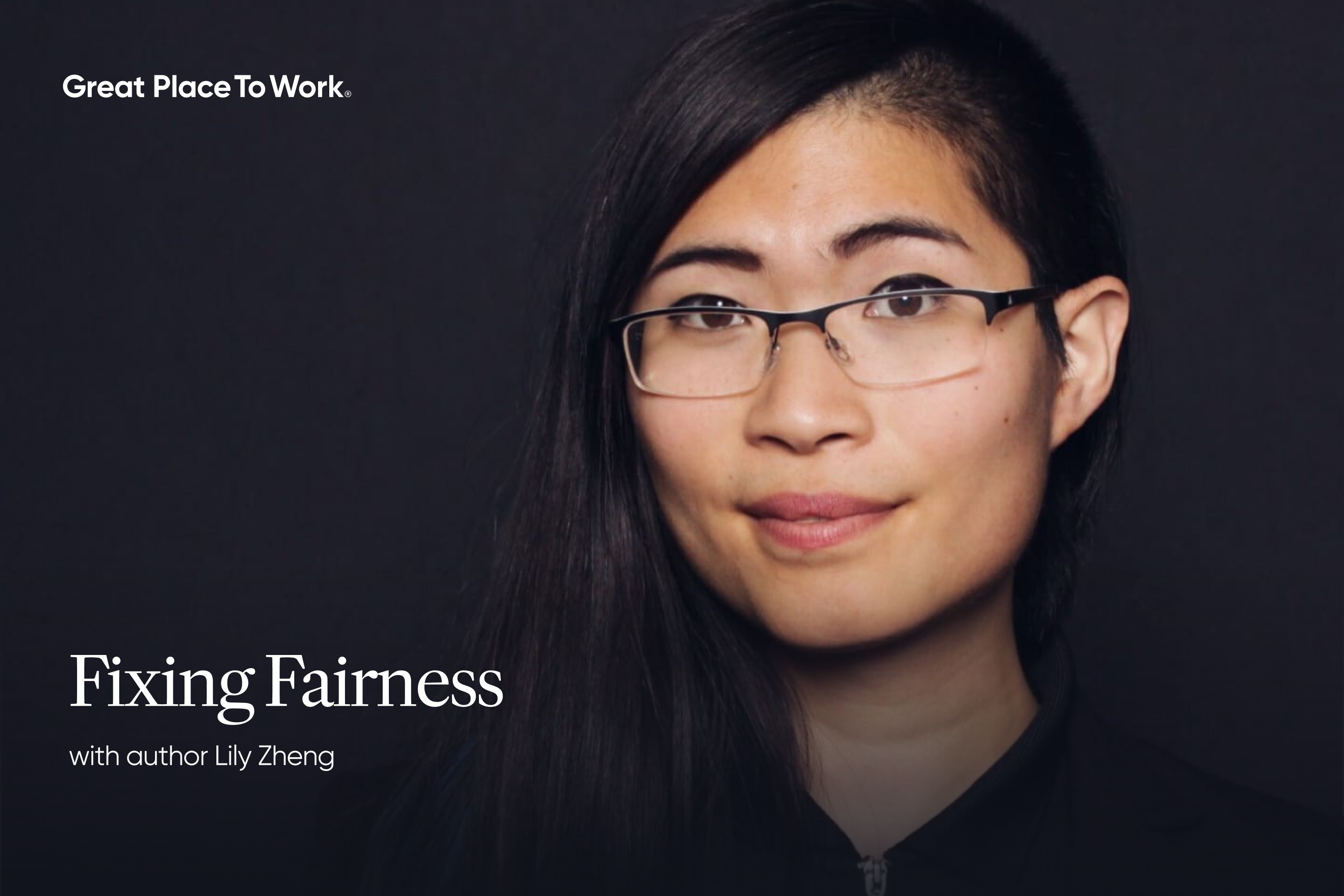
Here's what your efforts to build inclusion and belonging are missing, according to Lily Zheng, author of "Fixing Fairness."
As many workplaces have walked away from diversity, equity, and inclusion programs (DEI) in the last year, efforts to improve fairness remain deeply popular.
Eight in 10 Americans (82%) believe that diversity and DEI efforts are beneficial, even as support for DEI in the workplace has dropped.
What are we to make of this? Lily Zheng, author of the new book, “Fixing Fairness,” and principal at Lily Zheng Consulting, offers a clear diagnosis: most DEI efforts don’t know what they are trying to fix.
“If you talk to any non-CEOs, we get a very consistent picture of the American workplace, which is that it's not fair,” Zheng, who uses “they” pronouns, explains.
Nine in 10 Americans (91%) say they have experienced discrimination in the workplace. Many DEI efforts fail to change those outcomes because leaders struggle to learn from the data in front of them.
“This is not just a DEI-related problem,” Zheng says. Look at return-to-office mandates, or efforts to roll out AI tools, and you see the same pattern: leaders ignoring data and making “vibes based” decisions instead, they say.
That’s why the first tenet of Zheng’s new “FAIR” model for improving workplaces focuses on data-informed outcomes.
The first step is to help leaders understand the current state of their organization: “Any good leader should know what it is that they are choosing,” they explain. That means looking at turnover, employee engagement, productivity and work quality, legal risks, and reputational risks.
Only once leaders get curious about what their people are experiencing can they start to have meaningful conversations.
What gets leaders to buy in
When employees say they are paid fairly, they’re 46% more likely to give extra effort, according to Great Place To Work data. When they say promotions are fair, they are 29% more likely to go above and beyond.
That’s a starting place for getting leaders interested in change, but Zheng argues that it’s more powerful to focus on costs of doing nothing.
“Until you get people to recognize that the status quo is actually not okay, why would they put in a ton of time and energy into changing?” they explain.
The costs of unfairness can be staggering. Worker attrition and disengagement cost median S&P 500 companies about $282 million annually, per McKinsey.
For a typical company with 1,000 employees and salaries around $80,000 per employee, the back-of-the-napkin math suggests a typical retention rate might cost as much as $9.2 million.
How the ‘scarcity mindset’ prevents progress
The benefits of DEI work often improve the lives of the majority group, as well as the target group for any particular accommodation, what Zheng calls the “curb-cut effect.”
The idea comes from curb cuts in the sidewalk, a change that was spearheaded by disability advocates to improve wheelchair access, but has gone on to benefit anyone who has used a baby stroller, wheeled a suitcase, or ridden a bicycle over the curb.
So why do companies have a hard time celebrating these “win-wins”? Zheng’s answer: Scarcity mindset.
This belief in scarcity is being reinforced by an over-reliance on identity to organize efforts to improve fairness.
“Identity for a lot of people is a proxy for experience,” Zheng says. That can be helpful when trying to build community, and validating for people who are used to having their experience ignored.
However, insularity can be a problem once these groups, such as an employee resource group, start to try and effect change in an organization. Even well-meaning efforts to improve representation in leadership can backfire.
Instead of looking for leaders who share their identity, employees should look for leaders they can trust, Zheng says.
At the core, leaders need to build trust, which Zheng defines as “keeping promises.”
“It can be even really small things,” they explain. “When a leader tells a worker, ‘Hey, I'm going to talk to you on Monday — and then on Monday, they talk to them ... that builds a bit of trust.”
Listening to the needs of workers is essential, but trust only gets built when employees believe that you might change your mind based on what you hear.
Where every leader should start
For leaders who want to build a fairer and more just workplace, what’s the best place to start?
“Ground zero of this work is naming the ‘missing stair,’” Zheng says.
The metaphor of the missing stair is another concept from disability advocacy, where something in an organization is broken and everyone has learned to work around the problem.
“Instead of fixing the staircase, we teach everyone how to jump over it,” Zheng says. That could be a process that is blatantly discriminatory, a policy that's really outdated, a leader that is impossible to work with.”
Every workplace has one of these missing stairs.
“I guarantee that missing stair is connected to so many fairness related issues,” Zheng says. “I don't know what it is in your workplace, but I bet you do, even if you'd rather not admit it.”