

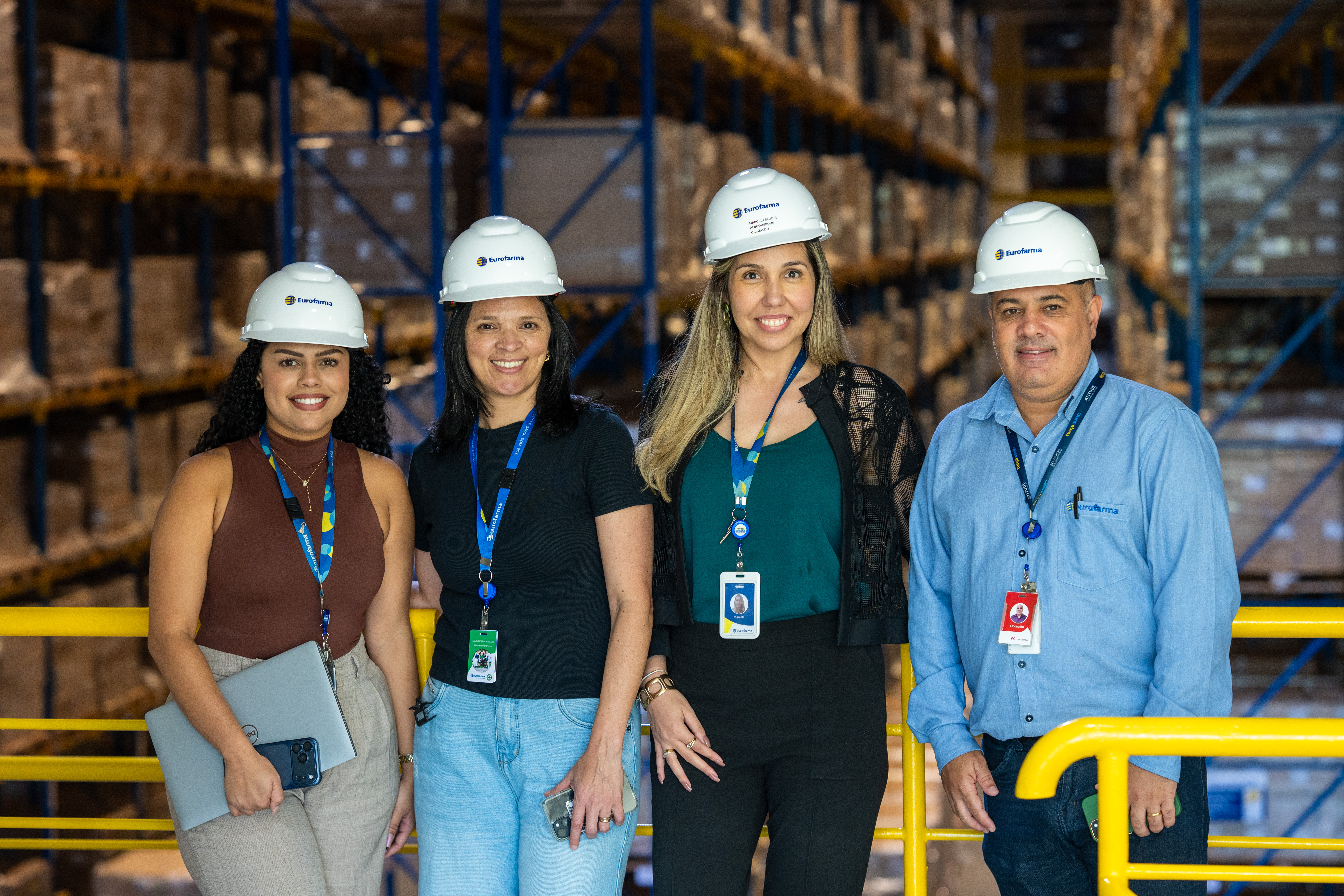

Employee loyalty means Eurofarma’s voluntary turnover rate is only 3% across its 13,000 employees.
A great workplace is an invaluable business asset.
Consider a company like Eurofarma. The pharmaceutical leader has 10 manufacturing plants and more than 200 production lines, but its advantage comes from its people, not its products.
“More than 90% of our products are not exclusive,” says Marco Billi, global CEO of Eurofarma. With alternatives on the market and competitors with the same technology and equipment, the competition comes down to people.
At Eurofarma, that looks like employees who take the initiative to build stronger relationships with clients or find better ways to manufacture products.
“We see innovation not only as a new molecule or a new product,” Billi says. “For instance, the relationship with the physician and with pharmacies is very important, so we always search for new ways to communicate with them.”
People in the manufacturing facility are constantly looking for more efficient ways to do things. That mindset helps Eurofarma to leapfrog its competitors when everyone has access to the same machines and materials.
The data proves that Eurofarma really is different. Eight in 10 employees (85%) believe people are celebrated for trying to innovate, regardless of the outcome. That’s 41% higher than the typical workplace in Latin America, according to Great Place To Work® global survey data.
What it takes to develop talent
Eurofarma spares no expense to develop its people, investing 7 million Brazilian reals annually in training. The reason? It wants people ready to take on roles the business needs.
“We always need to move people to another opportunity,” Billi says. “It’s very important to have our people engaged with the company and ready to assume new roles.”
One remarkable program is Eurofarma’s in-house master’s in business administration degree. Participants use real business cases from the company in their classwork, and Eurofarma can quickly apply any breakthroughs developed in the program.
The program also connects employees, building relationships across teams. The results have been so positive that Eurofarma is expanding the program to other countries this year.
Taking its culture global
International expansion can create cultural challenges. “It's very, very difficult to promote your culture outside of your own country,” Billi says.
Since 2009, Eurofarma has expanded across Latin America, from Ecuador to Argentina. Today, it operates in 24 countries in Latin America.
Again, people were the critical ingredient in bringing the culture built in Brazil into new markets. “People that you can export can be a multiplier,” Billi says.
Eurofarma learned to strike a careful balance in each new country between company veterans and local expertise. “If our general manager is a local person, our chief commercial officer is someone from Eurofarma,” Billi says.
To expand, Eurofarma relies on a steady pipeline of talent ready to take on leadership roles in new countries. That’s why the company carefully tracks development and internal promotions. It has succession plans for 96% of leadership roles and fills 70% of those positions internally.
Lessons for Latin America
Eurofarma’s growth didn’t happen overnight. Here’s what other companies can learn:
1. Put people at the center of your strategy
At Eurofarma, people aren’t a cost of doing business. They’re the heart of its growth strategy, as seen in its vision statement for 2072 (the company’s 100th anniversary). “We have a vision to become one of the 25 most important pharmaceutical companies in the world … but with people who love to be in the company,” Billi says.
That focus drives loyalty. Nine in 10 (93%) of Eurofarma employees want to stay with the company for a long time, a 45% increase over typical companies in Latin America.
2. Make it safe to make mistakes
Eurofarma boasts a healthy number of programs to encourage employees to innovate. People are rewarded for developing new processes through its CLIC program and intrapreneurship is rewarded with employees starting new projects or companies within Eurofarma. However, none of it works without tolerating mistakes.
“Of course you don’t want to keep doing the same mistakes,” Billi says, “but we have a culture oriented to not punishing mistakes, but happily correcting them and then going out and making new mistakes.
3. Measure how employees recommend your company
Employee surveys are crucial indicators of organizational health. One metric Billi watches is if employees would recommend Eurofarma to friends and family.
For a company that carefully measures turnover and promotions, this metric is a leading indicator of those outcomes. At Eurofarma, 91% of employees say they are proud to work at the company. It’s a result that Billi still wants to improve.
“When employees say that they would recommend someone they love to work at their company, that is because they really have confidence in the organization,” Billi says.
Get recognized for your culture
Gain accolades for your workplace environment and attract top talent who share your values.