



Gen Z, Generations at Work, Purpose
High-trust workplaces benefit every generation, but the youngest employees are falling behind.
Having a high-trust workplace benefits every generation — but Gen Z is still falling behind their older coworkers.
When employees trust their leaders and colleagues, they adapt to change faster, give extra effort, and want to stay with their company. That’s the Great Place To Work Effect, where trust fuels the culture drivers that lead to stronger financial performance.
However, Gen Z workers report lower trust than older generations, even at Great Place To Work® Certified™ companies. Lower levels of trust, for both Gen Z and Boomers, mean companies can expect higher levels of turnover.
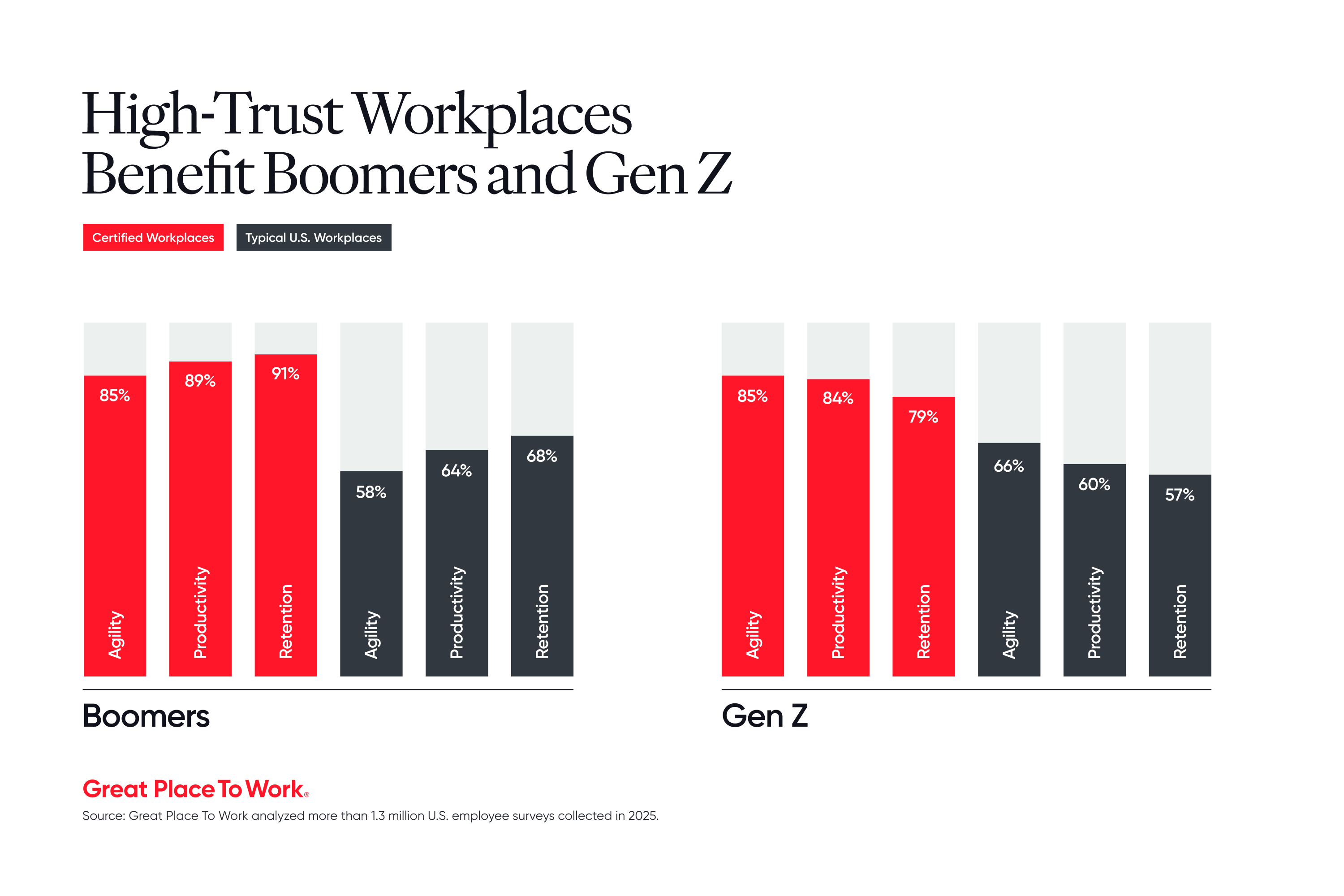
Something interesting happens when looking at Gen Z and retention. For agility and productivity, the gap between Boomers and Gen Z disappears or remains within five points. For retention, the gap doesn’t shrink but instead grows one point. Even with the benefits of a high-trust work environment, Gen Z isn’t catching up.
The underlying cause: how each generation feels their work is (or isn’t) meaningful.
Purpose at work is the top driver of retention for both generations, but Gen Z is much less likely to feel their work is meaningful. A whopping 90% of Boomers say their work is meaningful at Certified companies. For Gen Z, that drops to 74%, a 16-point gap.
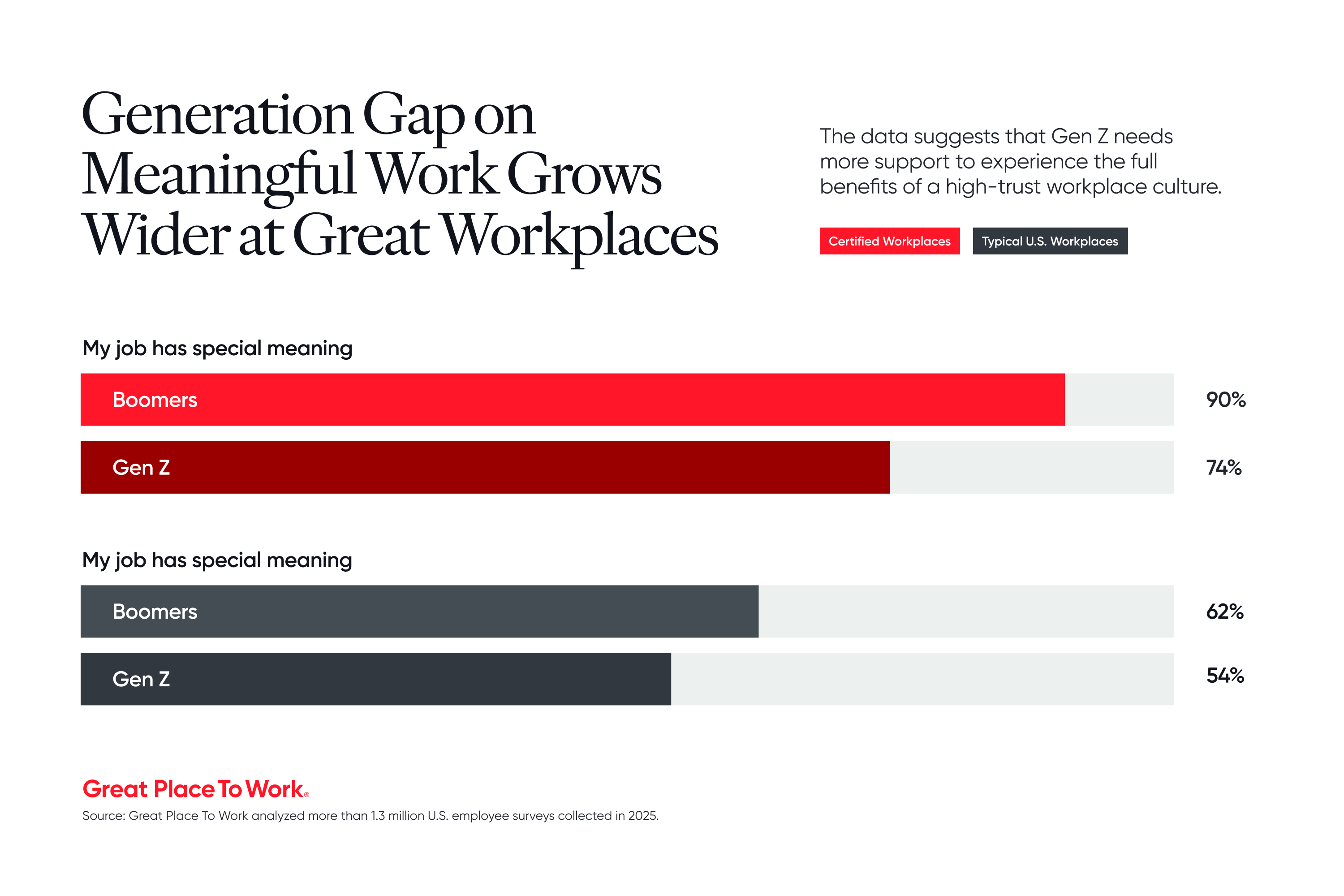
While Gen Z still benefits from working in a high-trust organization, structural issues prevent the experience gap from closing.
Other researchers see the same pattern. Gallup found that Gen Z’s workplace experience has deteriorated since 2020, with fewer Gen Z workers feeling cared for at work (down 13 points) or feeling their job is important (down nine points).
One explanation might be the rise of artificial intelligence, which is showing up in employment data for younger workers. New research suggests AI is eroding Gen Z’s connection to purpose.
In a series of studies at Zhejiang University in China, intrinsic motivation dropped 11% on average and boredom rose 20% when employees used AI to complete their work. Research from the University of Pennsylvania found when employees used AI to write their personal goals, psychological ownership collapsed and follow-through dropped from 73% to 47%.
Meaningful work, not promotions
The narrative that younger workers want to skip the hard work to earn a promotion isn’t backed by the data.
Promotions ranked only 10th among drivers of effort for Gen Z. A much stronger driver was cooperation: Gen Z workers who can count on their colleagues are 6.3 times more likely to give extra effort.
Meaningful work is the top driver of retention for Gen Z (3.6x more likely to want to stay), followed by psychological safety (1.7x) and confidence in leadership (1.6x).
How to support Gen Z
What should companies do to support their Gen Z workforce? Four practical ways to strengthen purpose and cooperation across generations:
1. Listen to Gen Z directly.
Hold focus groups where employees can share candid feedback without their managers in the room. Use your survey data to uncover gaps between Gen Z and the rest of your organization.
2. Get curious about how AI tools are landing across cohorts.
Your leadership team’s experience with AI will be different compared to junior staff or frontline employees.
3. Invest in mentorship and training for Gen Z.
Rethink how training is offered and intentionally build cross-generational working groups. An employee resource group focused on mentorship across generations is worth considering.
4. Don’t wait for attrition data to act.
Quit rates are a lagging indicator of the real problems facing your workforce. When an employee quits, it’s too late to mitigate the damage. Look for gaps proactively and address the issues you find.
Turn culture insights into business wins
Let the Trust Index™ Survey reveal your workplace’s hidden strengths and areas for growth. Start transforming today.